

Jay Rocco is the Founder and Editor of FullStack Alpha. He has tested 200+ AI stock tools since 2022 and run 15+ AI trading platforms on live accounts with his own money. He reviews the software. He does not tell you what stocks to buy.
Last updated: September 29, 2026
Quick Answer
Webull paper trading is a free simulator that lets you trade stocks, options, and other instruments with virtual money on live-ish market data, no real cash at risk. You access it inside the Webull app or at app.webull.com/paper, get a reset-able pool of virtual buying power, and place orders that fill against real-time or near-real-time quotes [4] [8]. It’s the single cheapest way to find out if your strategy actually works before you fund a live account.
On AI Stock Trading Bots: go deeper in our Paper Trading guide, and see How We Test for the method behind every score.
Key Takeaways
- Webull paper trading is free for anyone with a Webull account, no funding required to access it [8].
- You trade with virtual cash, and Webull confirms the balance can be reset if you blow it up practicing [1].
- A July 2026 update added a professional-grade experience with OpenAPI support for multi-asset simulation, a real signal that Webull is positioning paper trading as a serious tool, not a toy [6].
- Event contracts were added to the paper trading environment as part of that same maturity push, according to Finance Magnates [9].
- Options paper trading exists as a separate module built specifically for practicing multi-leg and complex derivatives strategies [7].
- Fills in simulation don’t always match live-market slippage, spread, or liquidity, so treat the results as directional, not exact.
- Trading volume on Webull’s platform surged after the PDT rule elimination, per the company’s Q2 2026 results, which means more small accounts are now eligible to trade live and more people need to test first [10].
- Paper trading has no commissions attached because there’s no real transaction happening, but that also means it can’t teach you how fees eat into a real edge.
What Is Webull Paper Trading and How Does It Work
Webull paper trading is a simulated brokerage account that mirrors the real Webull trading interface but runs entirely on virtual funds. You place buy and sell orders the same way you would live, and the system fills them against market or near-market prices [3] [8].
The point isn’t to feel good about fake gains. It’s to pressure-test a system, order types, position sizing, stop placement, before it touches real capital. Access it directly through the dedicated paper trading link inside the app, or at app.webull.com/paper on desktop [4].
Decision rule: if you can’t explain your entry and exit rules in one sentence before you open the simulator, you’re not ready to paper trade a strategy. You’re just clicking buttons.
Is Webull Paper Trading Free to Use
Yes. Webull paper trading is free, and you don’t need to fund a live account to use it [8]. Anyone with a Webull login can open the simulator and start practicing immediately.
That’s a meaningfully different model than some competitors that gate simulation behind a funded account or a subscription tier. There’s no catch here, no premium upsell. The free part is the point, since the entire value of a simulator disappears the moment it costs you money to find out your idea doesn’t work.
How Do I Start Paper Trading on Webull
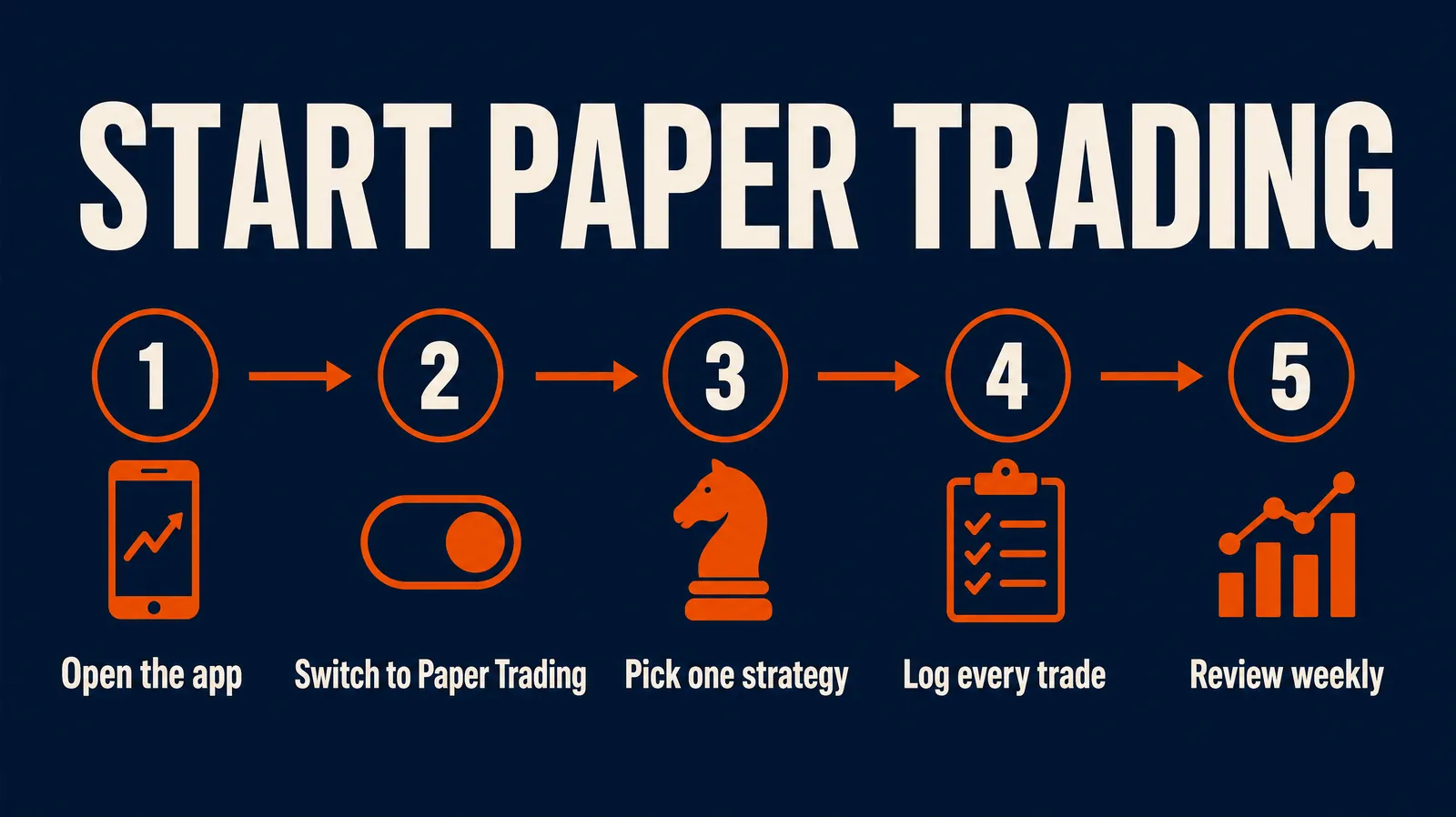
Open the Webull app, find the paper trading section (usually accessible from the account or trading menu), and select it to launch a simulated account separate from your live one [3]. On desktop, you can also go straight to app.webull.com/paper [4].
A basic startup sequence looks like this:
- Log into your existing Webull account, or create one, no funding needed.
- Navigate to Paper Trading from the main menu.
- Confirm your virtual starting balance in account settings.
- Build or import your watchlist.
- Place your first simulated order using the exact order type you plan to use live.
Webull’s own how-to guide walks through the interface toggle between legacy and newer paper trading systems, since the platform has run both in parallel during rollout [3].
Does Webull Paper Trading Have Real Market Data
Webull paper trading runs on market data during trading hours, which is what makes it useful for testing entries and exits against actual price action, not made-up numbers. Quote quality and fill behavior can still differ from a live order hitting a real exchange.
Here’s the honest caveat: simulators are notoriously generous with fills. You’re less likely to get slipped on a fast-moving breakout in paper mode than you are with real money, because there’s no real order competing for liquidity. If your paper trading account results look suspiciously clean, that’s not luck. That’s the simulator being nicer to you than the market will be.
Can I Practice Options Trading on Webull Paper Trading
Yes. Webull runs a dedicated options paper trading module built for testing multi-leg and complex derivatives strategies before you risk premium on them [7]. That includes spreads, single-leg calls and puts, and other structures depending on what the current build supports.
This matters more than most beginners realize. Options don’t just move with the stock, they move with implied volatility, time decay, and the greeks. Paper trading is the cheapest way to watch a spread lose value from theta decay even while the underlying goes nowhere, a lesson that’s brutal to learn with real premium on the line.
Webull Paper Trading vs Real Money Trading: What Actually Changes
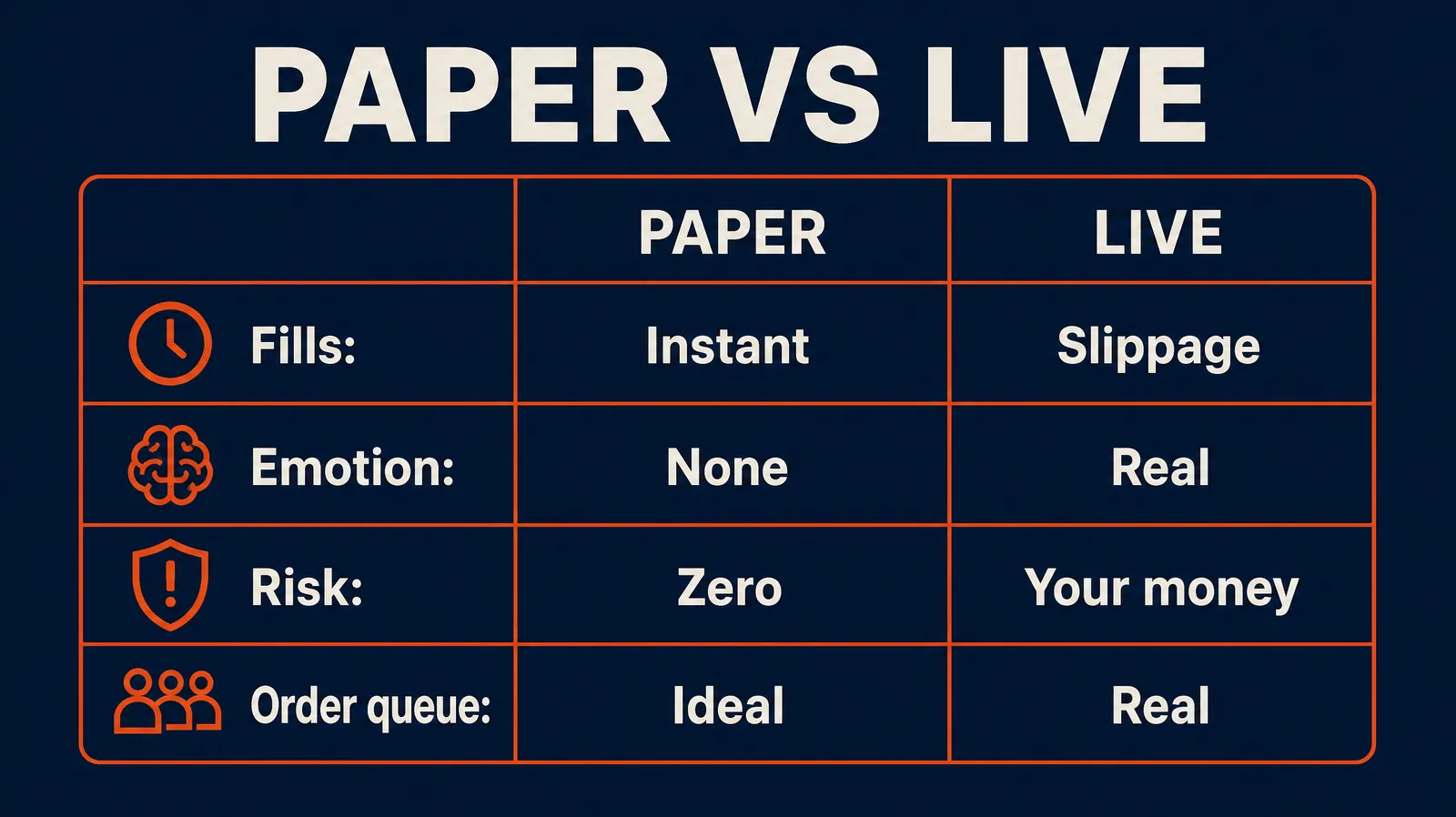
The mechanics look identical. The psychology and the execution quality are not. Paper trading strips out the two things that break most new traders: real fear and real slippage.
| Factor | Webull Paper Trading | Real Money Trading |
|---|---|---|
| Capital at risk | None, virtual funds only | Real dollars, real losses |
| Order fills | Often cleaner, less slippage | Subject to spread, liquidity, speed |
| Commissions | None | Depends on instrument and account [8] |
| Emotional pressure | Low to none | High, especially at size |
| Resettable balance | Yes [1] | No, losses are permanent |
| Data quality | Market-based during trading hours | Full live market conditions |
Practical takeaway: paper trade it first for the mechanics, then run a small live position for the psychology. A strategy that works clean in simulation but falls apart the first time real money is on the line isn’t a bad strategy. It’s an untested nervous system.
Why Isn’t My Webull Paper Trading Account Working
Most reported issues trace back to three things: being logged into the wrong environment (legacy vs. the newer upgraded system), a data delay outside regular trading hours, or an order type that isn’t supported in the simulator yet [3] [6].
Quick troubleshooting checklist:
- Confirm you’re in the paper trading environment, not your live account, before placing an order.
- Check if the market is actually open, quotes and fills can behave oddly after hours or on holidays.
- Update the app. Webull rolled out a professional-grade paper trading rebuild in July 2026 with OpenAPI support, and older app versions may not sync with it [6].
- If a specific order type won’t fill, it may not be supported in simulation yet, particularly for newer instruments like event contracts [9].
How Much Fake Money Do You Get on Webull Paper Trading
Webull’s paper trading account starts you with a set amount of virtual buying power, and you can reset that balance from account settings if you want a clean slate [1]. The exact figure has varied across product updates, so check your current account settings rather than assuming a fixed number.
The reset function is the part that actually matters. Real accounts don’t get a reset button after a bad month. Use paper trading’s reset freely, blow it up on purpose testing a risky idea, then rebuild the account and try the disciplined version of the same setup.
Is Webull Paper Trading Good for Beginners
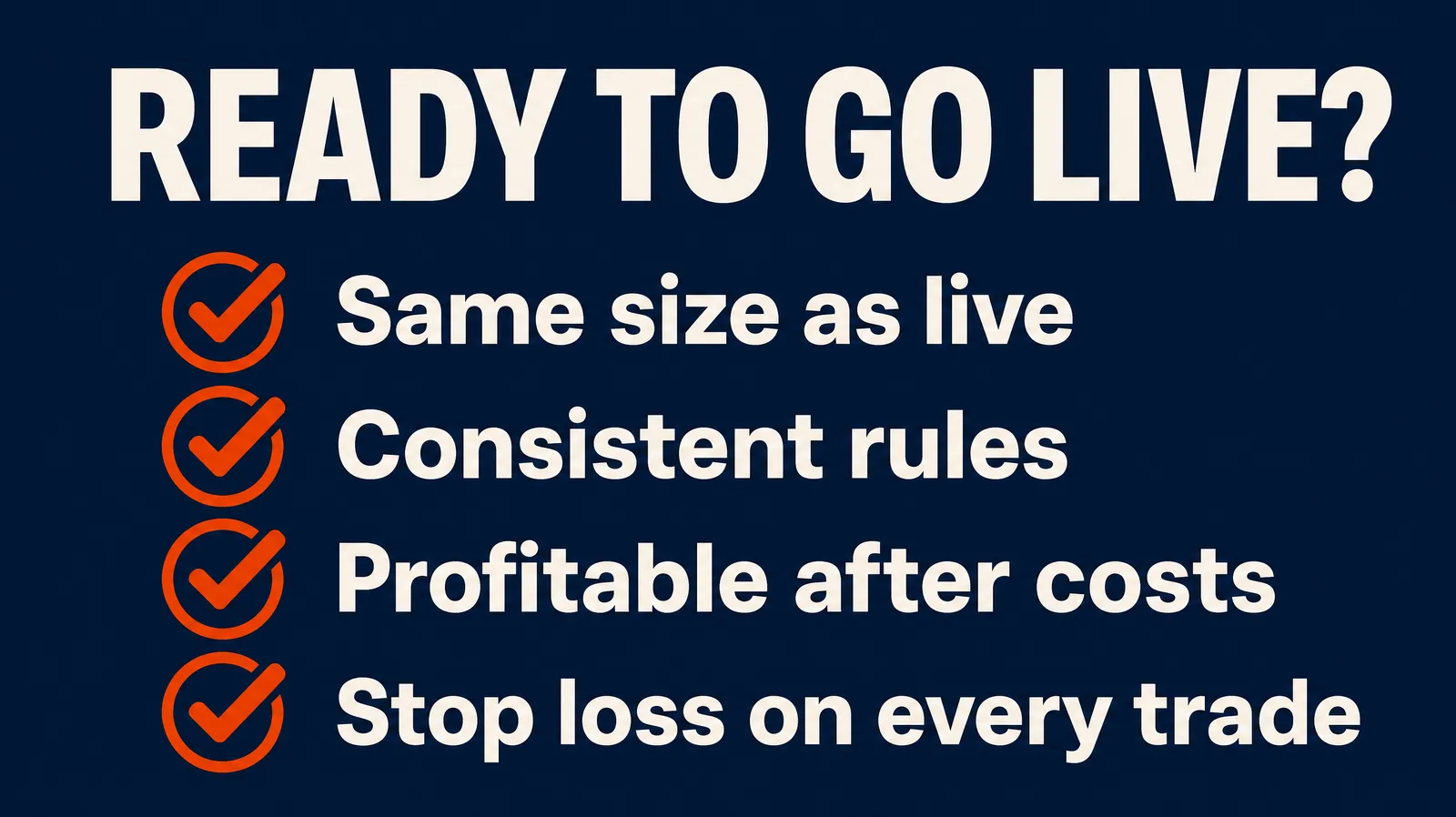
Yes, with one condition: it only works if you treat the fake money like it’s real. Beginners who paper trade with a “who cares, it’s not real” attitude learn nothing except how to click buy and sell buttons.
Where it genuinely helps a beginner:
- Learning the actual interface before fat-fingering a live order.
- Practicing position sizing and risk-reward without financial consequences.
- Building the habit of writing down entry and exit rules before the trade, not after.
- Testing order types (limit, stop, trailing stop) in a no-risk environment.
For a broader look at where these tools fit into a beginner’s process, our breakdown of AI trading apps and what to check before downloading one covers the same discipline question from a different angle.
Can You Make Real Money From Webull Paper Trading
No. Paper trading gains and losses are entirely virtual, there’s no mechanism to convert simulated profit into real cash [8]. Anyone telling you otherwise is selling something, not teaching something.
What you can extract from a strong paper trading track record is confidence backed by data, a tested process, and a smaller list of mistakes to make with real money. That’s not nothing. It’s just not a paycheck.
Webull Paper Trading Common Mistakes to Avoid
The biggest mistake is sizing paper trades like they’re a video game, then sizing real trades like they’re paper trades. Both directions of that mismatch cause damage.
Common errors worth naming directly:
- Oversizing positions because losses don’t sting, then carrying that habit into a funded account.
- Ignoring commissions and fees entirely, since paper trading has none, which distorts your sense of what a strategy actually nets after costs.
- Overtrading the simulator out of boredom instead of running a defined number of setups per week, the same discipline you’d need live.
- Skipping the stop loss because getting stopped out doesn’t cost anything emotionally in paper mode. That habit will hurt when it’s real money getting stopped out.
- Confusing a clean paper trading result with an edge. One good month proves nothing. Run the expectancy calculator against a full sample of trades before you trust it.
How Long Can You Use Webull Paper Trading
There’s no published expiration on Webull’s paper trading access, it’s designed as an ongoing practice environment you can return to indefinitely [8]. The realistic answer for how long you should use it depends on your own results, not a platform limit.
Decision rule: keep paper trading a specific strategy until you’ve logged enough trades to draw a real conclusion, generally 30 or more, across different market conditions, not just a hot week. If you want a structured way to check whether those results hold up statistically, our guide on backtesting a trading strategy without fooling yourself covers the sample-size problem in more detail.
Webull Paper Trading vs Thinkorswim vs Other Simulators
Webull’s paper trading now runs a professional-grade, multi-asset simulation with OpenAPI access, added in a July 2026 rebuild, putting it closer to institutional-style testing environments than a basic demo account [6]. Thinkorswim’s paper trading (paperMoney) has long been considered a benchmark for options-heavy simulation depth.
Where Webull tends to differ:
- Access: free and built into the same app you’d trade live on, no separate platform download.
- Asset coverage: stocks, options, and event contracts inside one simulator, with event contracts added as part of the 2026 expansion [9].
- API access: OpenAPI support for multi-asset simulation is a newer addition that appeals to traders building or testing bots, not just clicking manual orders [6].
If you’re comparing brokers more broadly before committing to one for both practice and live trading, our full Webull review breaks down the platform beyond just the simulator, and the best AI day trading platforms for 2026 covers a wider field.
Does Webull Paper Trading Have Commissions and Fees
No. Paper trading has no commissions or fees because no real transaction is settling, there’s nothing for a broker to charge you for [8]. That’s convenient for testing entries and exits, but it’s also a blind spot.
Real trading, especially options and futures, carries per-contract fees, spread costs, and sometimes data fees that quietly erode a strategy’s edge. A system that looks profitable in a fee-free simulator can turn marginal or negative once real costs are subtracted. Before funding a live account, manually subtract a reasonable per-trade fee estimate from your paper trading results and see if the strategy still holds up.
A Practical Workflow for Testing a Strategy
- Write the rule set first: entry trigger, stop loss, target, position size. If it’s not written down, it’s not a system.
- Open Webull paper trading and run the strategy on a defined list of tickers for at least two to four weeks [3].
- Log every trade: entry, exit, reason, outcome. No exceptions.
- Run the results through an expectancy check, not a gut feeling, using the trading expectancy calculator.
- If the numbers hold across different market conditions, fund a small live position and repeat the process with real money on the line.
For traders building the underlying edge before any of this, our piece on finding a trading edge before risking a single dollar is the step that comes before paper trading, not after.
Our Take
Webull paper trading solves one problem: it separates “does my strategy work” from “can I handle the emotional weight of real money.” Those are two different questions, and most blown-up accounts happen because a trader answered neither one before going live.
Run the strategy in the simulator for real, log every trade, check the math with an expectancy tool, then fund a small position and watch what changes when the money is real. Systems over hacks, process over prediction. That’s the whole game.
FullStack Alpha cuts the noise so you can keep the alpha. There are 200+ AI stock and broker tools catalogued in the FullStack Alpha directory, filterable by category and price.
Browse the FullStack Alpha directory of 200+ AI stock tools
Some links on this page are affiliate links. If you open an account through one, FullStack Alpha may earn a commission at no added cost to you.
Keep Going
More from AI Stock Trading Bots: Paper Trading · Trading Bots by Broker · Backtesting.
Written and edited by Jay Rocco, Founder and Editor of FullStack Alpha. 200+ AI stock tools tested since 2022. Educational content only, not financial advice. See our Financial Disclaimer and How We Make Money.
Free weekly email
Join the FullStack Alpha newsletter
One email a week. The AI trading tools we tested, what broke, and what is worth your money. NO BS, no stock picks. Stay alpha.
Unsubscribe anytime. We never sell your email.
Stay alpha.
References
[1] Webull Help: paper trading FAQ
[2] Webull: Paper Trading (EU)
[3] Webull Learn: How to Paper Trade
[4] Webull Paper Trading web app
[5] Webull Blog: How to Practice Trading With a Free Paper Trading Simulator
[6] Webull press release: upgraded paper trading experience (PR Newswire)
[7] Webull Learn: Options Paper Trading
[8] Webull: Paper Trading
[9] Finance Magnates: Webull adds event contracts to paper trading
[10] Webull Q2 2026 results: trading volumes surge after PDT rule elimination
Frequently Asked Questions
Is Webull paper trading available internationally?
Webull runs region-specific versions, including EU messaging that frames it as risk-free practice before live trading, and the core mechanics stay consistent across markets.
Do I need a funded Webull account to paper trade?
No. Paper trading is accessible without depositing real money.
Can I paper trade options and event contracts on Webull?
Yes. There's a dedicated options paper trading module, and event contracts were added to the simulation environment in 2026.
Will my paper trading results match my real trading results?
Not exactly. Fills tend to run cleaner in simulation, and there are no commissions or slippage pressures that show up in live trading.
How do I reset my Webull paper trading balance?
Webull's help documentation confirms the virtual balance can be reset from account settings if you want to start fresh.
Is Webull paper trading the same as a demo account on other brokers?
Conceptually yes, though Webull's 2026 rebuild added multi-asset and OpenAPI support that puts it closer to a professional testing environment than a basic demo.
Jay Rocco is the Founder and Editor of FullStack Alpha. He has tested 200+ AI stock tools since 2022 and run 15+ AI trading platforms on live accounts with his own money. He reviews the software. He does not tell you what stocks to buy.
