

Jay Rocco is the Founder and Editor of FullStack Alpha. He has tested 200+ AI stock tools since 2022 and run 15+ AI trading platforms on live accounts with his own money. He reviews the software. He does not tell you what stocks to buy.
Last updated: September 25, 2026
Quick answer: The Interactive Brokers TWS API lets Python programs read account information, receive market data, and automate orders through a logged-in Trader Workstation or IB Gateway session, with no separate native API license fee but with brokerage charges, data subscriptions, and operating limits. The dangerous part is treating a successful connection as proof that an order is safe to send. Those are different tests.
Key takeaways: the IBKR advantage
The IBKR advantage is broad brokerage access from code, backed by the same account permissions and trading controls that govern manual activity. Python-comfortable swing traders and measured intraday traders are the strongest fit; latency-sensitive scalpers need stricter execution testing.
- TWS is the trading terminal. The API connects your program to that terminal or IB Gateway, rather than directly to a public cloud endpoint.
- The default TWS ports are 7497 for paper and 7496 for live. Match the configured port, not a tutorial screenshot.
- IBKR separates software access from trading costs. Commissions and market data can still cost money.
- Market data permissions belong in the setup. A quote visible on a website does not prove your API session has the same entitlement.
- IBKR lists API 10.50 as latest and 10.45 as stable. Choose deliberately and record the installed package version.
- Paper trading comes before live automation. Test rejected orders, lost connections, and partial fills, not just the happy path.
This guide uses desk research from official IBKR materials, not claimed hands-on testing. Public forum anecdotes are troubleshooting leads, not performance measurements.
Searching “interactive broker tws api”? What is the TWS API, and how does it connect?
The TWS API is an interface between your program and a running IBKR trading session. Your Python client sends a request through a local or permitted network socket; TWS or IB Gateway handles brokerage communication and returns events to your program.
API solutions: an introduction to the connection model
Think of the connection as a controlled service entrance. Your account still needs authentication, trading permission, and enough available funds. The API does not bypass those checks because the instruction came from Python.
The native programming model separates outgoing calls from incoming callbacks. EClient sends a request. EWrapper receives information such as prices, order status, and connection messages. The message-processing loop must keep running while your strategy makes decisions.
That event model changes how you write trading software. A function returning does not necessarily mean IBKR has completed the requested action. A request can still be pending, rejected, or waiting for another event. Build your internal state model around confirmed events.
For example, a market data request starts a subscription. Quotes then arrive through callbacks. A trading model that reads a variable immediately after sending the request may find no price at all, or a value left over from an earlier subscription.
IBKR-API Home and our API offerings
IBKR presents native, web, and institutional connectivity options on its API solutions website. Start there before copying an endpoint from a search result. Different interfaces have different authentication, session, and request rules.
The Web API is a separate interface family. Browser access, web authentication, and an HTTP request model are not interchangeable with a native socket connection. A Python HTTP client cannot replace ibapi merely by pointing at the TWS port.
IB Gateway is different again: it is an alternative host for the native connection, not a competing broker API. Your native client can connect to either host, subject to the configured port and session settings.
Choose TWS while learning. Seeing the account, order ticket, and working orders beside your logs helps you catch a wrong symbol or account selection before it becomes an expensive mystery. The terminal’s visual context is useful during development.
For the broader broker profile, see FullStack Alpha’s Interactive Brokers directory entry. Keep broker selection separate from software design: a suitable account still needs a reliable program.
What the API will not do for your trading model
IBKR supplies connectivity, order handling, and permitted information. It does not supply a profitable entry and exit model. Your code remains responsible for position sizing, stale-price checks, and the decision to stop trading.
A model can correctly identify support and resistance, meaning price areas where buying or selling previously appeared, and still send a duplicate order after a timeout. Market analysis and execution engineering deserve separate checklists.
How do you set up the TWS API step by step?
Install compatible IBKR software, enable socket clients, match the connection settings, and prove a read-only connection before enabling order submission. Keep paper and live account settings separate from the beginning.
Platform downloads: start with the official package
Download the native API package from IBKR’s software website rather than assuming an unrelated package with a familiar name is current. The official distribution includes Python source and examples. Keep a local copy with your deployment notes.
The supplied release information lists API 10.50, released September 9, 2026, as latest, while 10.45 remains stable. Latest does not automatically mean suitable for an existing trading model. Read the changelog before changing a working environment.
Create a dedicated Python environment. Install from the official package following its included instructions, then confirm where Python imports ibapi from. A stale library in another environment can turn a clean setup into a debugging scavenger hunt.
Record the operating system, Python version, IBKR package version, and terminal build. These are deployment facts, not trading signals. The release notes and API changelog describe different parts of the software stack, so read both when investigating a regression.
Configure the account session before the request
Log into the paper account in TWS. Open the API settings and enable Enable ActiveX and Socket Clients. Leave Read-Only API enabled while testing connections and permitted information requests. Disable it only when intentionally testing order submission.
Match the socket port in Python to the value shown in TWS. The documented defaults are below, but users can change them. A default port is a convention, not proof of account identity.
Connection stat: TWS defaults to 7496 live / 7497 paper; IB Gateway defaults to 4001 live / 4002 paper. Verify the actual account session as well as the port.
For a program on the same machine, connect through loopback. For another machine, review trusted IP settings and firewall access. Do not expose the socket broadly just to make a connection error disappear.
Give each concurrently connected client a distinct client ID. Keep the mapping in configuration so the research process, execution process, and recovery process do not collide. Client identity also affects how order information is associated with a connection.
Python connection test using the official ibapi client
The following example makes no trading request and sends no order. It waits for nextValidId, which is a practical handshake signal, then disconnects. The client ID and timeout are example settings, not IBKR requirements.
import threading
from ibapi.client import EClient
from ibapi.wrapper import EWrapper

class ConnectionTest(EWrapper, EClient):
    def __init__(self):
        EClient.__init__(self, self)
        self.ready = threading.Event()
        self.next_order_id = None

    def nextValidId(self, orderId):
        self.next_order_id = orderId
        self.ready.set()

    def error(self, reqId, *details):
        # Error callback fields differ between API versions.
        print("IBKR message:", reqId, *details)

app = ConnectionTest()
worker = None

try:
    app.connect("127.0.0.1", 7497, clientId=17)
    worker = threading.Thread(target=app.run, daemon=True)
    worker.start()

    if not app.ready.wait(timeout=10):
        raise TimeoutError("No handshake. Check TWS and socket settings.")

    print("Handshake received. No orders submitted.")
finally:
    app.disconnect()
    if worker is not None:
        worker.join(timeout=2)
Do not replace the callback wait with an arbitrary sleep and call the connection ready. A slow startup, authentication prompt, or blocked socket can outlast your guess. Readiness should come from observed protocol events.
The new synchronous wrapper for TWS API
IBKR now documents a synchronous connection interface alongside the familiar callback model. A synchronous wrapper can make sequential workflows easier to read, but it does not remove brokerage session requirements or make execution instantaneous.
Keep examples consistent with the installed release. Mixing a synchronous introduction, an older callback example, and a different package version is a reliable way to confuse method names and return behavior.
Who should use the TWS API: day traders, swing traders, or algo builders?
The TWS API suits swing traders, account rebalancers, and algorithmic traders who can manage a persistent brokerage session. Day traders can also benefit, but a scalper whose model depends on tiny latency advantages should measure the whole execution path before committing capital.
API use cases: match the trading model to the machinery
A swing trader can automate the watchlist, submit planned limit orders, and monitor account exposure. A clean setup might form during tight consolidation, a narrow price range, or basing, a period where price builds a floor. Neither pattern excuses careless order handling.
A day trader can connect live quotes to defined execution rules. The model should reject stale information and cap exposure before an order reaches IBKR. Quote availability still depends on the relevant account subscriptions.
A long-term position investor may need far less machinery. If the task is occasional rebalancing, the cost of maintaining a session and recovery process can outweigh the convenience of automation. IBKR offers several interfaces; choose around the actual workflow.
For research upstream of execution, compare swing trade scanners that find setups or AI tools for day traders. A scanner proposes candidates. Your trading model must still decide what qualifies.
Can the TWS API handle algorithmic trading?
Yes. IBKR explicitly offers programmable trading connectivity, and the native interface supports account information, market data, and order workflows. The harder question is whether your algorithm can handle uncertainty without increasing risk.
Keep the strategy model separate from the execution model. The strategy proposes a trade; the execution layer checks account identity, permissions, exposure, price age, and existing orders. A signal should never get to skip the queue because it looks exciting.
Reading the tape means interpreting recent trades and quotes. A low float, meaning relatively few freely tradable shares, can make that tape erratic. Choppy tape can turn the breakout into a bull trap, a move above resistance that quickly fails.
The API cannot classify those risks for you. It can deliver permitted information and accept instructions. Keep research tools and broker execution separate, as discussed in AI stock analysis tools that flag risks.
Dated software facts worth recording
Release stat: IBKR’s latest listed API package is 10.50, dated September 9, 2026. Save the release identifier with your deployment record.
Compatibility stat: API 10.49 changed
Last_SizeandDelayed_Last_Sizehandling toDecimalthroughtickSize. Audit code that assumes integer quantities.
Data stat: IBKR describes a standard starting allowance of 100 concurrent market data lines, with allowances affected by account arrangements. Displayed terminal quotes and API subscriptions can draw from the same allowance.
Pacing stat: The familiar native baseline is 50 outgoing messages per second. Treat that as a documented starting constraint, not a promise that every request type permits that throughput.
These are software and service facts, not evidence of investment performance. None tells you the risk-reward of your next trade.
Top 5 TWS API features algo traders use most
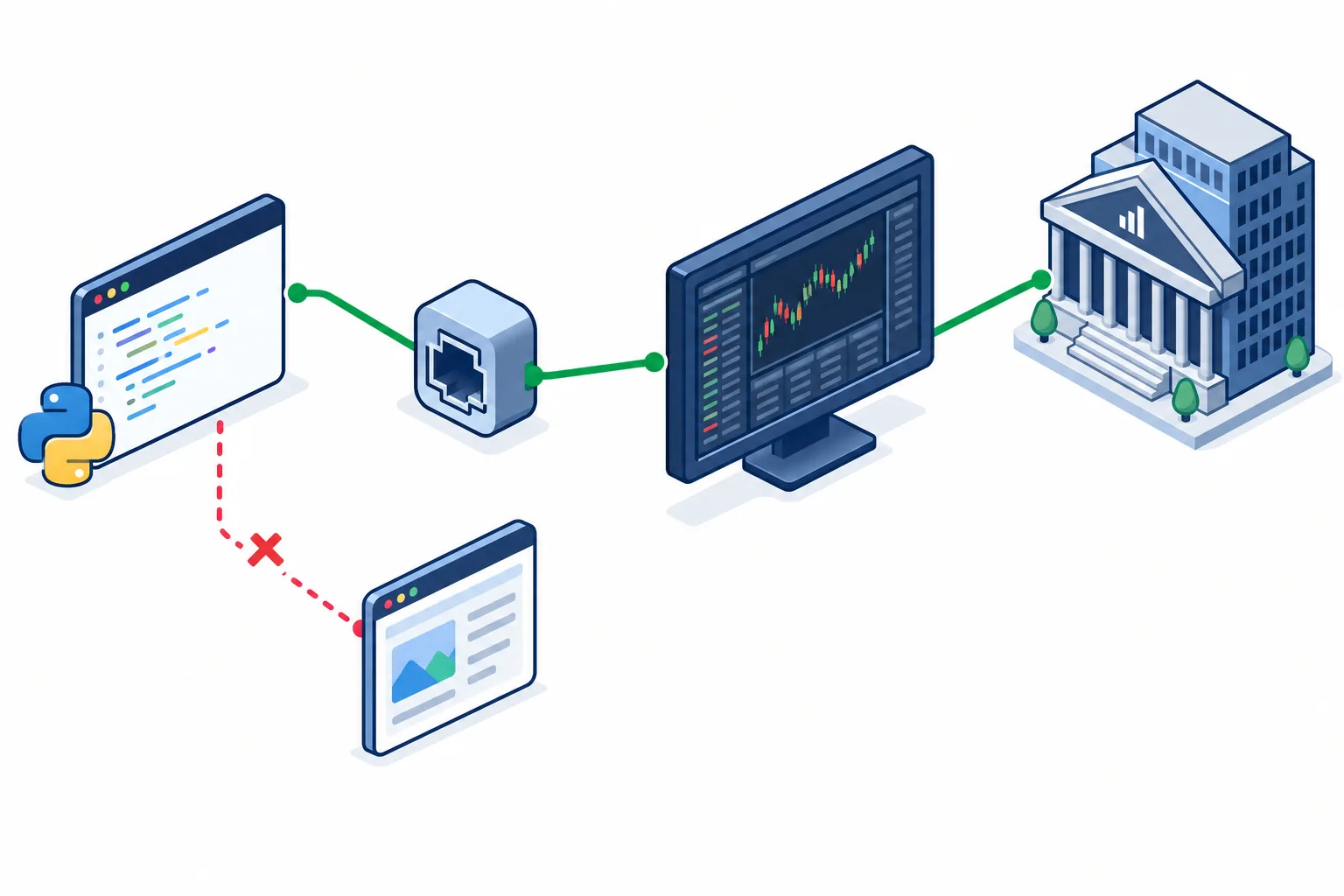
The most useful native features connect account state, prices, and execution in one program. Their value comes from reducing manual handling while preserving checks around every order.
- Market data callbacks: Feed permitted quotes into your model without copying prices from a terminal.
- Programmable order submission: Translate an approved trading decision into a broker instruction.
- Account information: Compare intended exposure against the account state reported by IBKR.
- Contract identification: Resolve the instrument before relying on a ticker that may be ambiguous across locations or products.
- Paper-session development: Exercise the connection and order workflow before risking live funds.
Trade smarter: build an order state model
An execution model should distinguish a proposed order from a submitted order, a working order, a partial fill, and a completed or cancelled order. A local send event is only the beginning of that lifecycle.
Store an internal strategy identifier beside broker identifiers. Preserve a copy of the intended instruction and the events received afterward. That audit trail helps explain whether a duplicate came from the strategy, reconnect logic, or a manual intervention.
A timeout creates uncertainty. Do not automatically repeat an order request because the response was slow. Reconcile the broker’s account and order information first. Blind retries are acceptable for some read operations; execution needs tighter rules.
Attention: contract details and order defaults
Confirm the instrument, exchange routing, currency, quantity unit, and account before submission. Stocks, options, and futures do not share every contract field or quantity convention. Copying an equity example into a futures model without checking those differences is avoidable risk.
Do not let a default become an undocumented assumption. The supplied September 24, 2026 changelog update describes a combo-order trigger default moving from Last to Bid/ask. Review affected strategies and set supported behavior deliberately.
Recent changes also include ManualOrderIndicator fields connected with CME workflows. Technical availability does not determine your legal obligation. Have the relevant account or compliance contact resolve applicability.
Paper trading: verify behavior, not imagined profits
Paper trade it first, including cancellations and reconnects. IBKR’s paper environment is useful for learning the API workflow, but simulated fills cannot establish your live queue position or trading capacity.
A stop loss defines an intended exit condition, not a guaranteed execution price. Getting stopped out during a gap can cost more than the model expected. Your position sizing should leave room for that possibility.
Keep automation rules beside the human decision process. FullStack Alpha’s discussion of AI trading assistants addresses that boundary: software can enforce a rule faster than a person, including a bad rule.
How does the TWS API compare with Web API, FIX, and competitors?
Choose the native interface when you want IBKR’s socket-based workflow and can maintain TWS or Gateway. Consider web connectivity when HTTP integration better fits your application, and assess other platforms around account eligibility, supported assets, and operational needs.
Feature comparison: TWS, IB Gateway, and Client Portal Web API
TWS and Gateway host the same native interface family. Client Portal Web API belongs to the web stack, with different session and authentication arrangements. Do not compare Gateway as though it were an unrelated broker service.
| Option | How it runs | Uptime needs | Languages | Best use |
|---|---|---|---|---|
| TWS API through TWS | Socket to logged-in terminal | Terminal and client remain running | Official native clients, including Python | Development with visual oversight |
| TWS API through Gateway | Socket to Gateway session | Gateway and client remain running | Same native client family | Dedicated automation host |
| Client Portal Web API | HTTP and supported web channels | Authentication and session management | HTTP-capable languages | Web-oriented applications |
The comparison describes architecture, not guaranteed availability. Consult IBKR’s current offerings for the web authentication route available to your account and application type.
Web API documentation and iserver workflows
In web examples, iserver identifies brokerage-session endpoint families. An iserver request has different prerequisites from a native method call. Successful access to a website or account overview does not prove every trading endpoint is ready.
Keep an iserver session model separate from your native connection model. An iserver authentication issue should not trigger a native order retry, and an HTTP response should not be parsed as an EWrapper callback.
FIX and alternative trading platforms
FIX is aimed at a different integration need than a small Python script attached to a desktop terminal. Ask IBKR about eligibility and onboarding rather than assuming it is a faster drop-in replacement.
For alternatives, evaluate these buyer fits without assuming feature parity:
- Alpaca API: investigate for an API-centered application, then check supported products and country access.
- TradeStation API: investigate if you want automation tied to an existing TradeStation workflow.
- Schwab API: investigate if account access at Schwab is your starting constraint.
- QuantConnect: investigate if you want a hosted research and algorithm framework, rather than only a broker connection.
No competitor latency measurements or current price comparison were verified for this article. IBKR’s positive case remains its connected brokerage workflow; its drawback is the session machinery you must maintain.
What limits and costs catch TWS API users off guard?
The main surprises are market data entitlements, request pacing, order validation, and the cost of maintaining a reliable session. The native interface has no separate license charge, but “free API” does not mean a free trading operation.
Keep more of your returns: separate the cost buckets
Budget separately for brokerage commissions, exchange charges, subscriptions, financing where applicable, and your own server or workstation. Your trading frequency and account arrangement determine which costs dominate.
Do not choose a commission plan from a screenshot in an old introduction. Check current account eligibility and the actual activity you expect. API availability does not promise that every account plan has identical conditions.
A small commission can still overwhelm a weak model that keeps turning over the account. Automating overtrading only removes the time you once spent hesitating.
What are the data feed costs with Interactive Brokers TWS?
Market data costs depend on the exchange, product, subscriber classification, and package. Check the current pricing website while logged into the relevant account; do not assume a public price applies to your status.
Professional and nonprofessional classifications can change subscription charges. So can the distinction between top-of-book quotes and market depth. Buy the information your model actually reads, not every feed visible on the menu.
A US-listed stock trading on multiple venues raises another question: which coverage does your model require? A limited quote feed and consolidated coverage are different inputs. Record the feed assumption in your research notes.
Delayed information is useful for learning callback behavior, but it is unsuitable for a live entry rule that assumes current prices. Your model should store the requested and reported data type instead of treating every tick alike.
Snapshot requests also have their own conditions and possible charges. A snapshot is a point-in-time request, not a streaming subscription with a different name. Read the pricing notes before putting snapshots inside a polling loop.
Find your account: minimum balance and permissions
There is no useful universal account-balance answer covering every region, product, and subscription. Separate the minimum to maintain an account from the funds needed for a trade, margin eligibility, and any subscription requirements.
A funded account can still lack permission for a product. An account with permission can still fail an order because funds or margin are insufficient. Query current information and handle rejection without assuming the account state stayed unchanged.
Do not hard-code regulatory day-trading assumptions from a blog. Check the rules and restrictions currently applied to your account and jurisdiction before putting an intraday model into service.
Fund in your trading currency
Base currency is an account reporting setting, not a promise that every purchase has the required currency available. Confirm the instrument currency, cash balances, and account treatment before sending the order.
Your risk model should distinguish the security position from currency exposure. A correct share quantity can still create an unintended funding position. Keep currency handling explicit rather than burying it in a helper function.
TWS API rate limits and throttling restrictions
Pacing limits control how fast the client can send instructions and request information. The familiar native baseline does not erase separate limits for historical information, market depth, or particular subscription types.
Build a central request scheduler. If each strategy sends independently, a group of polite-looking modules can collectively exceed a shared allowance. A request budget must cover the whole connection, not just the function currently under review.
Streaming subscriptions also consume capacity while active. Cancel subscriptions the model no longer needs and track the result. Forgetting the watchlist from yesterday can crowd out the symbols you need today.
Historical requests need their own queue. Cache completed results, avoid repeating identical downloads, and check the current restrictions for the requested bar size and information type. A backfill process should not compete blindly with the live execution loop.
Back off after a pacing error. Retrying immediately can prolong the problem. Your request model should distinguish temporary throttling from invalid input and missing account permission.
TWS API order size limits and restrictions
There is no single maximum order size that applies to every IBKR product and account. Quantity validity depends on the contract, venue, funds, permissions, and broker controls. Validate those inputs before the trading decision reaches execution.
Your own position limit should be stricter than the broker’s acceptance boundary. Broker acceptance means an instruction passed applicable checks; it does not mean the position fits your risk management plan.
Do not round every quantity into an integer without reviewing the supported type and product. The recent Decimal change in size callbacks is a reminder that numeric assumptions deserve explicit tests.
Latency and performance issues
No verified universal latency figure is offered here. Measure quote arrival, decision completion, local submission, broker acknowledgement, and execution separately. One average number hides where the delay occurred.
Keep slow disk writes, web calls, and model inference away from the message-processing loop. Blocking callback handling can make current information appear late even when the incoming connection is healthy.
A scalper should evaluate tail delays, not just the usual case. During earnings season or power hour, the late-session trading window, a model can face heavier activity precisely when it has the least room for stale inputs.
Why does the TWS API connection keep dropping, and how do you fix it?
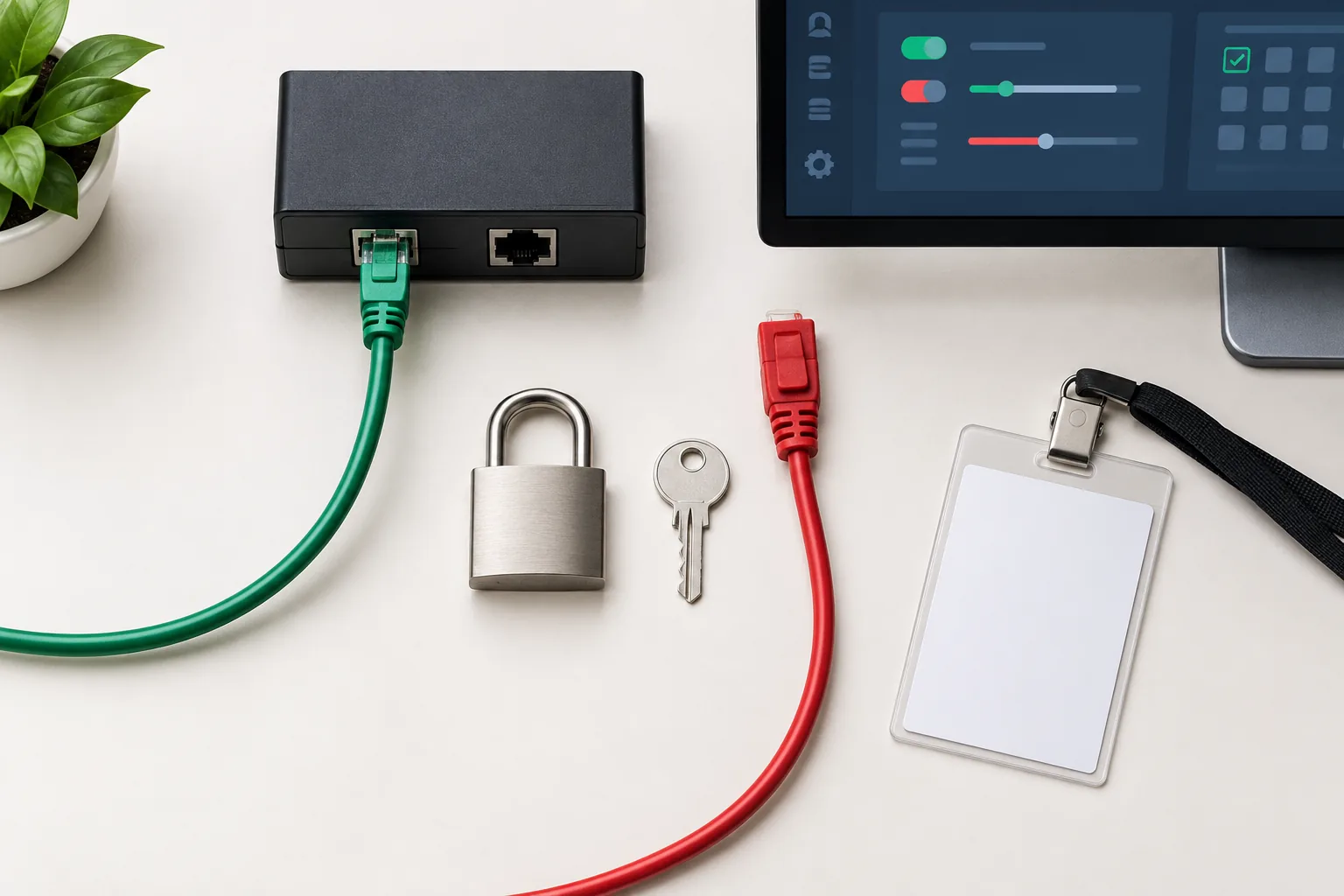
A dropped connection can come from the local client, the terminal session, the network, or brokerage connectivity. Identify which layer failed before reconnecting, and suspend new orders until account and order state have been reconciled.
Connection troubleshooting: check the local path first
Confirm that TWS or Gateway is running and authenticated. Then check the host, configured port, socket-client setting, trusted IP handling, and whether another process already occupies the client ID.
If the failure appeared after an upgrade, compare the terminal release notes with the API changelog. Save a copy of the error text and version information before changing more settings.
A healthy socket does not prove market data readiness. Missing subscriptions, changed permissions, or a different requested feed type can leave your model without the expected quotes.
Recovery: reconcile before resuming trading
After reconnecting, refresh account information and working orders before permitting new execution. Compare the broker view with your saved local state. Any disagreement should block new risk until resolved.
Restore subscriptions deliberately. A reconnect routine that resubscribes to everything ever requested can exceed capacity and recreate the original problem. Keep an active-subscription registry separate from your research history.
Use a freshness threshold chosen for your model and instrument. If a quote is too old, reject the proposed order. A gap fill, meaning a move back into a previous price gap, is not worth trading from stale information.
Common mistakes people make with the TWS API
The most damaging mistakes are usually ordinary: mixing account configurations, skipping contract checks, blocking the callback loop, assuming delayed prices are current, and replaying an uncertain order. The official introduction and examples help establish the mechanics, but your safety checks remain your responsibility.
Keep strategy changes separate from connection repairs. Otherwise a failed reconnect can become an excuse for revenge trading, where the program increases risk to recover a loss. Software does not remove that habit if you coded the habit into the model.
Where should you find IBKR API documentation, training courses, and privacy information?
Start with official software downloads, the current changelog, and IBKR’s educational material. Treat copied website text, community snippets, and search-result fragments as pointers that require checking against the installed release.
IBKR-API documentation and additional resources to get started
For an introduction, read IBKR’s source-code lesson and initial setup material. Then follow a single request from the client call through its callback and error handling. That small exercise is more useful than collecting another unfinished tutorial.
For market information, pair the Python receiving-data lesson with current pricing and the market data documentation. Technical access and paid entitlement answer different questions.
Searches for an Interactive Brokers TWS API tutorial, example, download, or GitHub repository should lead back to identifiable official material. A repository being easy to copy does not make it maintained or compatible.
IBKR API training courses and Traders’ Academy
IBKR Campus provides lessons that explain the Python client and receiving quotes. Turn those lessons into trading sample assignments: connect, qualify a contract, receive information, and disconnect cleanly before adding execution.
Save a copy of each working exercise with its package version. An introduction written for an earlier release may still teach the architecture while needing small code changes.
Latest IBKR Quant articles, IBKR Quant Blog, and RSS
IBKR Quant articles can provide ideas for research workflows. Traders’ Insight, Traders’ Insight RSS, and IBKR Quant RSS serve a different role from API documentation: editorial discovery rather than a contract for software behavior.
Follow links from IBKR’s own website rather than guessing a feed location. For changes that affect execution, check the official changelog and terminal release notes instead of relying on an article summary.
Public sentiment, including Reddit discussion, can suggest a reproducible failure to investigate. It cannot prove an outage rate, latency benchmark, or win rate. No such community statistic is claimed here.
IBKR LLC (U.S.): account location and disclosures
Interactive Brokers LLC is the US entity associated with NYSE, FINRA, and SIPC references. Other account locations can involve other legal entities and regulators, including the Monetary Authority of Singapore. Check your agreement and registered office details rather than assuming US arrangements apply everywhere.
SIPC does not cover market losses. Read the account’s Warnings, Disclosures, and Information before deployment.
Our Take
The TWS API is a strong fit for Python-comfortable traders who want control over account-aware automation and accept the burden of session management. Its main drawbacks are operational upkeep and the separate rules around data access, pacing, and order handling.
Start with the read-only connection test. Confirm the paper account, resolve a contract, receive the intended quote type, and save the observed events. Only then add an order workflow with explicit exposure limits and a recovery plan.
An overextended stock, a dead cat bounce, or catching a falling knife can all produce losses. A duplicate order is a different category: preventable damage from your own machinery. Fix that machinery before debating the next entry.
That is the full stack alpha mindset: systems over hacks. Put the connection test on your calendar now, before another strategy idea adds another moving part.
References
These official IBKR sources support the software, connection, and market data discussion. Living documentation can change; retain the version and release information relevant to your deployment.
- Changelog
- Connect Start Connection
- Prod 2026
- Accessing The Tws Python Api Source Code
- Market Data Pricing
- interactivebrokers.github
- Initial Setup
- Market Data
- Ib Api
- Python Receiving Market Data
Picking a broker is one decision. Picking what runs on top of it is the next. Browse 200+ tools by category and price in the FullStack Alpha directory.
Affiliate disclosure: FullStack Alpha may earn a commission from qualifying purchases through affiliate links.
By Jay Rocco, Founder and Editor, FullStack Alpha.
Stay alpha.
Frequently Asked Questions
Is IBKR tws API free?
IBKR does not charge a separate license fee for the native TWS API. Your account can still incur commissions, exchange charges, financing costs, and market data subscriptions. Check current pricing for your products and subscriber classification before treating an automated trading model as inexpensive to operate.
Does Interactive Brokers have a real-time data API?
Yes. IBKR supports real-time market data through its API offerings, subject to account permissions, subscriptions, and service limits. Requesting quotes successfully does not prove they are live: your program should inspect the feed type and freshness. Delayed information can help with development but should not silently drive a live trading model.
What are the differences between the IBKR TWS API and the web API?
The native TWS interface connects through a socket to a running TWS or Gateway session. The web interface uses web-oriented request and session mechanisms. Authentication, available workflows, and limits differ. Choose based on deployment needs and supported account access, rather than assuming that a web request and a native method behave identically.
Is Interactive Brokers TWS free?
Trader Workstation is available without a separate platform subscription charge for eligible IBKR users. Trading and information services can still generate charges. The useful budgeting question is what your account, trading frequency, products, and quote requirements cost together, not whether downloading the terminal itself requires a payment.
Does the TWS API work with paper trading accounts?
Yes. The native interface supports paper sessions, making them a sensible location for connection and order-workflow development. Verify the logged-in account and configured port before testing. Paper execution is simulated, so a successful exercise does not establish live fill quality, slippage, or the capacity of your trading model.
Can a Python script run without TWS open?
A native client can connect through IB Gateway instead of the full TWS terminal. It still needs the appropriate running, authenticated host session. Closing the process that serves the socket breaks that path. If your application requires a web-first architecture, investigate IBKR’s web offerings rather than treating Gateway as a public cloud endpoint.
Should you copy an example from Reddit or GitHub?
Treat community examples as review material. Confirm the package version, account environment, contract fields, and submission behavior before running anything. Prefer the official IBKR distribution as your starting location. Never execute an unfamiliar script against a live account simply because a discussion describes it as a working example.
Jay Rocco is the Founder and Editor of FullStack Alpha. He has tested 200+ AI stock tools since 2022 and run 15+ AI trading platforms on live accounts with his own money. He reviews the software. He does not tell you what stocks to buy.
