

Jay Rocco is the Founder and Editor of FullStack Alpha. He has tested 200+ AI stock tools since 2022 and run 15+ AI trading platforms on live accounts with his own money. He reviews the software. He does not tell you what stocks to buy.
Last updated: September 25, 2026
Quick answer: Traders searching “option backtesting free” can start with tastytrade, thinkorswim, Option Alpha’s trial, QuantConnect, or the open-source LEAN engine, but account access, coding, and historical data limits differ. tastytrade is the clearest starting point for eligible traders who want a broker-based strategy tester without a separate subscription. QuantConnect and LEAN share an engine, so this list covers five access routes, not five unrelated technologies.
A free subscription can still produce expensive mistakes. Before trusting a result, check whether the tool tested actual historical options, assumed generous fills, or merely drew a payoff curve.
Key takeaways
- tastytrade includes its options backtester with an account, without a separate backtesting subscription.
- thinkorswim offers historical replay through thinkOnDemand, which suits manual practice better than bulk strategy research.
- Option Alpha offers trial-based access; treat its free period as temporary.
- QuantConnect fits traders who can write code and want rules they can inspect.
- LEAN removes the software subscription, but historical options data remains your responsibility.
- FullStack Alpha recommends choosing by data quality and strategy fit before comparing dashboard polish.
What is option backtesting, and why do you need it?
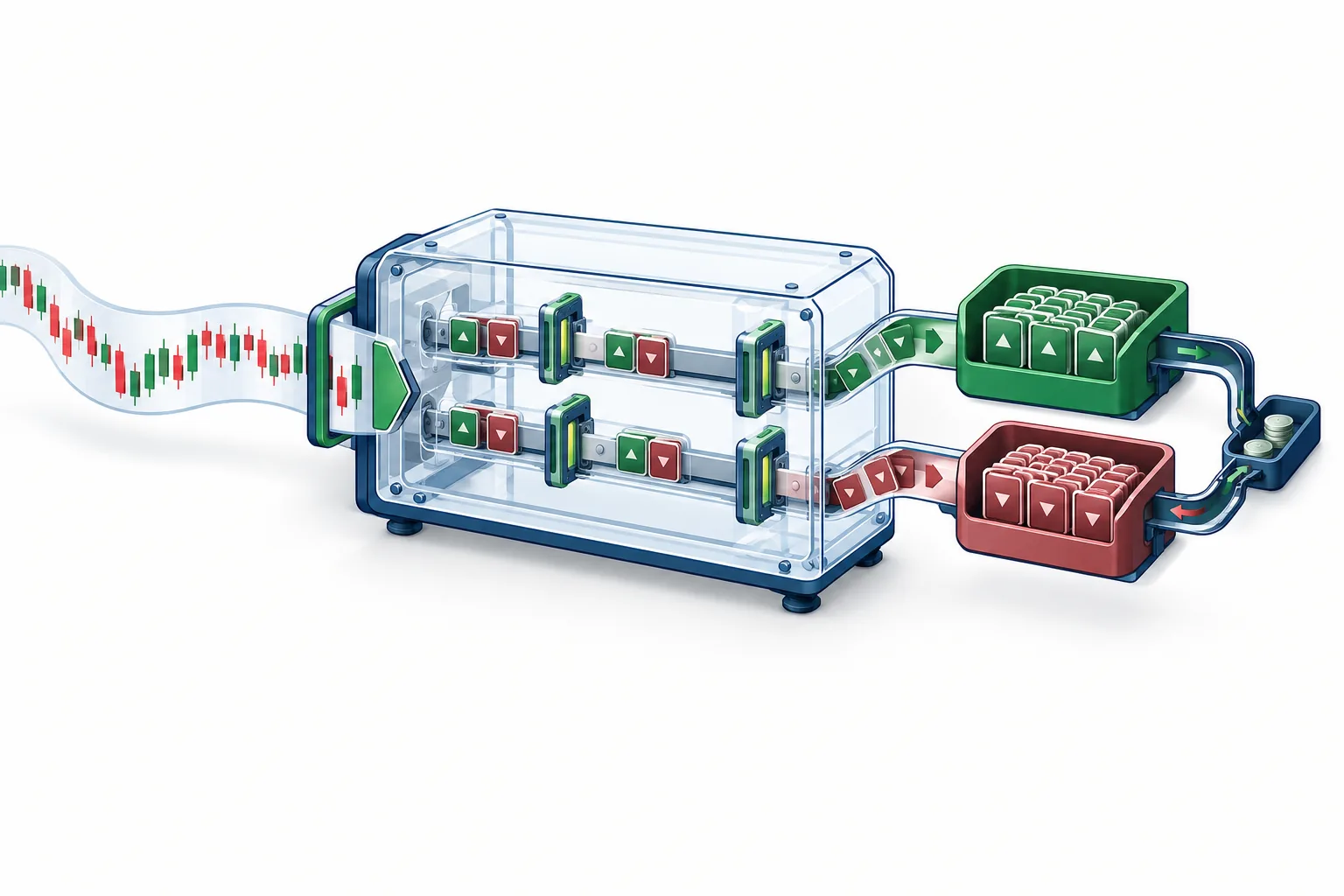
Option backtesting applies trading rules to historical market data to estimate how a strategy would have behaved. It helps you find weak entry and exit rules before paying for those lessons with live capital.
A useful options backtest needs more than the underlying stock chart. It needs the contracts available at the time, their prices, and rules for selecting and closing them.
A bullish stock call can be correct while a call option loses money. Time passes, expected volatility falls, or the bid-ask spread consumes the gain. The bid is what buyers offer; the ask is what sellers request.
That gap is a trading cost, even if the broker advertises no platform fee.
Historical testing, payoff charts, and paper trading
These tools answer different questions:
- Historical backtesting: What happened when these rules met past options prices?
- Payoff modeling: What could this position be worth under assumed prices and dates?
- Paper trading: Can you follow the rules in a simulated account as markets move?
Free option backtesting is useful for rejecting weak ideas. Paper trading checks whether you can execute the surviving idea without chasing trades or changing the rules after a loss.
A colorful payoff chart cannot replace a historical options dataset. Keep that distinction close while shopping.
Searching “option backtesting free”? Which tools really cost $0?
tastytrade provides account-based access, thinkorswim provides broker-based replay, and Option Alpha provides a temporary trial. QuantConnect offers a free cloud starting point, while LEAN is free software that you run yourself.
Free access and free historical data are separate promises. A platform may charge nothing for its engine while charging for data, extra computing capacity, or exports.
This roundup uses desk research and the supplied provider material. It does not claim hands-on testing. Public user sentiment can reveal questions worth checking, but no measured Reddit consensus or unsupported user verdict is presented here.
These are fit-based selections, not scored rankings.
Which free options backtesting tools require no deposit?
Option Alpha’s advertised trial requires no credit card. QuantConnect’s free account and a source installation of LEAN do not require a brokerage deposit.
tastytrade and thinkorswim require eligible brokerage access. Do not assume that opening an account, funding an account, and receiving every platform permission are the same step. Confirm current eligibility and access before transferring money.
International readers should check country restrictions first. A free broker tool is no bargain if the account is unavailable where you live.
What should replace an older free-software shortlist?
Use access terms relevant to 2026 rather than carrying forward an old ranking. A formerly free feature may become paid, and a broker may add historical testing without a separate subscription.
For broader discovery, the AI options trading tools directory separates options-focused products from general stock research tools. A stock screener alone cannot reconstruct expired option contracts.
What do the 5 free option backtesting tools include?
The five choices cover automated testing, manual replay, and code-based research. Start with the route that matches your strategy and technical skill, then check the data available inside that route.
The table combines tool names and free-access limits to keep the comparison readable on mobile. Unverified upgrade prices are left unquoted rather than guessed.
| Tool and free-access limits | Strategies supported | Historical data | 0DTE fit | Paid upgrade |
|---|---|---|---|---|
| tastytrade: included with eligible account. | Single-leg and multi-leg rules. | More than 10 years advertised. | Check intraday timing and available rules. | No separate backtester subscription. |
| thinkorswim: Schwab access; manual replay. | Manually simulated options positions. | thinkOnDemand replay; inspect contract coverage. | Practice only; simulated fills need caution. | No platform subscription for clients. |
| Option Alpha: advertised 30-day trial. | Supported short-dated strategy rules. | Advertised 3 years of minute data. | Explicit short-dated research focus. | Confirm current post-trial terms. |
| QuantConnect: limited free cloud resources. | Coded options strategies. | Dataset and entitlement dependent. | Possible with suitable data and code. | Compute and data charges vary. |
| LEAN: free source engine; supply data. | Custom coded options strategies. | Only the history you provide. | Possible; no data included by default. | Data, hosting, or support may cost extra. |
1. tastytrade: the practical starting point for rules-based testing
Best fit: swing traders and longer-term position investors using repeatable options rules.
tastytrade’s backtester is included with an account. Its published material describes more than a decade of historical testing without a separate subscription, data add-on, or platform tier.
The tool supports single-leg and multi-leg strategies. Users can set contract selection, days to expiration, quantity, entry conditions, profit targets, stop losses, and holding periods.
Days to expiration, usually shortened to DTE, means the time remaining before a contract expires. Delta measures an option’s estimated price sensitivity to the underlying and can also serve as a contract-selection rule.
What the free access helps you do: compare repeatable versions of a strategy instead of manually rebuilding every historical position.
Drawbacks: access depends on a brokerage account, and the supplied platform documentation places the backtester on web and desktop rather than mobile or tablet. Scalpers must also check the tool’s timing resolution before assuming it can test fast exits.
Start with one liquid underlying and a fixed exit rule. A saved strategy is only useful if you can explain what every setting does.
2. thinkorswim thinkOnDemand: historical replay for manual practice
Best fit: discretionary day traders and swing traders who want to rehearse decisions.
thinkOnDemand lets users revisit historical markets and place simulated trades. thinkorswim is available without a platform subscription for eligible Schwab clients.
The strength is practice. You can pause around an entry, examine the options chain, and record why you accepted or rejected the setup.
What the free access helps you do: study the relationship between price action, meaning price movement, and the options position you would have traded.
Drawbacks: manual replay takes time, and simulated fills are not evidence that a live order would have filled at that price. Automated chart-strategy testing should not be mistaken for an automated historical options portfolio test.
If your strategy depends on judgment around support and resistance, the price areas where buying or selling has repeatedly appeared, write that judgment down. Otherwise, replay becomes hindsight with a pause button.
3. Option Alpha: short-dated research during a free trial
Best fit: day traders testing supported same-day and next-day options strategies.
Option Alpha advertises a 30-day full-feature trial with no credit card required, unlimited backtests during the trial, and three years of one-minute historical options data. These are provider-advertised terms in the supplied material, not independently measured performance claims.
What the free access helps you do: test supported intraday rules without first committing to a paid subscription.
Drawbacks: the trial expires, and minute-level observations cannot establish what happened between those observations. Strategy coverage and contract selection still need checking.
Prepare your rules before activating the trial. Spending the trial period browsing settings is an expensive way to use something free.
The Option Alpha overview provides a separate starting point for reviewing its wider platform.
4. QuantConnect: free cloud research for traders who code
Best fit: systematic swing traders and technically capable day traders.
QuantConnect provides a cloud environment for coding and running backtests through its LEAN engine. Its free starting access can support options research, subject to available datasets, account entitlements, and computing limits.
What the free access helps you do: define contract selection, position sizing, and entry and exit logic in code that you can inspect.
Position sizing means deciding how much capital a trade can put at risk. Code makes that rule repeatable, but it does not make the rule sensible.
Drawbacks: coding errors can create convincing false results, and cloud data access does not mean you can download that dataset for free. Free computing resources also limit how much research you can run at once.
Check the current account’s options datasets before building the strategy around a particular exchange, symbol, or historical period.
5. LEAN: a free local engine for technical traders
Best fit: experienced coders who already have suitable options data.
LEAN is the open-source engine behind QuantConnect. Running the engine from source is a separate route from using QuantConnect’s hosted research service.
What the free software helps you do: inspect the testing logic and run local research using compatible data you have the right to use.
Drawbacks: the engine does not arrive with a complete free historical options database, and local setup takes technical work. Hosted services, data packages, and command-line service access can have separate terms.
The zero-cost claim here applies to the source engine. Do not confuse that with every service carrying the LEAN name.
For a trader with no data and no coding experience, this is a project rather than the shortest path to a useful backtest.
Who should use free option backtesting: day traders, swing traders, or long-term investors?
Swing traders usually have the easiest starting point because their rules depend less on split-second execution. Day traders need intraday data, while long-term position investors need accurate treatment of dividends, assignment, and capital use.
Scalpers should be the most skeptical. A strategy that targets tiny price changes can fail after a modest spread or fill delay. Free options backtesting may help reject the idea, but it rarely settles the execution question.
Which free options backtester is best for beginners?
Choose tastytrade if you can access an account and want a rules-based tester. Choose thinkorswim if you learn better by replaying a market session manually.
A beginner should be able to explain the contract selected, why the trade opened, and why it closed. If those answers are hidden behind unfamiliar settings, reduce the strategy’s scope.
Which numbers help you compare access?
More than 10 years of history: tastytrade advertises this historical reach for its options backtester. Check whether your chosen symbol and contract type cover the same period.
$0 separate backtester subscription: tastytrade describes backtesting as included with every account. Live trading costs and account eligibility remain separate questions.
More than 400 studies: TrendSpider’s overview describes thinkorswim’s broad analytical library. Study count measures available analysis tools, not the accuracy of an options backtest.
A swing trader should favor clean daily records over a large indicator menu. A covered-call investor should review share ownership and assignment assumptions before admiring the return chart.
For contract selection, the stock options screener filter guide explains screening criteria. Apply the same criteria consistently during historical testing.
Top 5 features to look for in a free options backtester
Choose a free options backtester that exposes its data, assumptions, and individual trades. A report you cannot audit has limited use, even when the interface looks expensive.
- Historical contract selection: The tool should select contracts that existed on the entry date, including expired contracts.
- Visible execution assumptions: Bid, ask, fees, and slippage should be included or adjustable.
- Rule-based exits: Profit targets, stop losses, and time exits should behave the same way across the test.
- Trade-level records: You should be able to inspect a suspicious result rather than trust a summary chart.
- Separate validation periods: The workflow should let you check unchanged rules against unused history.
A stop loss is an instruction or rule intended to limit loss. Getting stopped out in a simulation at an exact trigger price does not prove that price was available live.
Before choosing a platform, write a sample trade and ask whether the tool can reproduce every step. That check beats a feature-count contest.
How does free options backtesting compare to competitors?
Free tools are a sensible starting point for learning and rejecting weak strategies. Paid tools become worth considering when a named limitation blocks your research, such as missing intraday history or inadequate control over execution costs.
| Platform | Who it suits | What to verify |
|---|---|---|
| tastytrade backtester | Swing traders wanting included broker-based testing | Data timing, supported rules, account access |
| Option Alpha | Day traders researching short-dated strategies | Trial expiry and ongoing access terms |
| Option Omega | Traders considering a dedicated options research service | Current trial terms, supported products, data resolution |
| ORATS | Researchers seeking detailed options data and testing controls | Subscription cost, data scope, fill assumptions |
Option Omega and ORATS are comparison alternatives, not extra members of the free shortlist. No permanent free access is assumed for either.
Do not pay merely because a service can run more parameter combinations. Testing every possible setting makes it easier to find a strategy that happened to fit the past.
A paid subscription should solve a specific problem you can name. “The equity curve looks better” does not qualify.
What do Reddit discussions reveal about free options backtesting?
Reddit discussions can flag awkward workflows, slow replay, or questionable fills, but anonymous comments do not establish current pricing or data quality. No verified Reddit consensus is claimed in this article.
When reading a thread, check its date, strategy, and data frequency. A complaint from an intraday spread trader may tell a covered-call investor very little.
Use public user sentiment to build questions for the provider. Use provider documentation and visible trade records to answer them.
Where do free option backtests fall short?

Free option backtests can fail through missing contracts, unrealistic fills, and rules that use information unavailable at the time. Paid backtests can fail for the same reasons.
Historical depth cannot rescue a bad execution model. A long record of imaginary fills is still imaginary.
How accurate is free option backtesting?
Accuracy depends on the data and assumptions, not the subscription price. Match the data interval to the decisions the strategy makes.
A daily closing-price dataset cannot establish whether an intraday profit target occurred before a stop loss. One-minute data narrows that gap, but it still cannot prove the order of every price movement inside a minute.
Watch for these errors:
- Look-ahead bias: using information that was not known at entry.
- Missing expired contracts: testing only contracts that are easy to retrieve now.
- Midpoint fills everywhere: assuming every order fills halfway between bid and ask.
- Ignored assignment: omitting the stock obligation created when a short option is exercised.
- Unrealistic buying power: taking positions a live account could not support.
Can you get free options backtesting with historical data?
Yes, through included broker tools, trial datasets, and supported cloud research access. A free local engine alone does not provide historical chains.
A historical chain is the set of listed contracts and their associated quotes at a past moment. Stock prices cannot fully reconstruct those option prices because volatility expectations, dividends, and other inputs also affect value.
Current-chain downloads are not a substitute for a licensed archive. If data is missing, record the gap rather than silently inventing quotes.
How can you backtest an iron condor for free?
Use a tester that supports multi-leg positions, then define both credit spreads and a shared exit policy. tastytrade documents multi-leg testing and configurable selection and exit rules.
An iron condor combines a call credit spread and a put credit spread. Each spread pairs a sold option with a bought option farther from the underlying price.
Use this checklist:
- Choose a liquid underlying and a historical period.
- Fix expiration selection and strike-selection rules.
- Set wing width, the distance between each short and protective option.
- Define entry time, exits, and maximum overlapping positions.
- Include every contract’s costs when opening and closing.
- Inspect the largest losses and missing-data dates.
- Run the unchanged rules on a separate period.
Keep short-option assignment and expiration handling visible. Closing a spread before expiration changes the risk you are testing.
How long does option backtesting take?
Simple built-in tests may run quickly, but reviewing data and trade records usually takes longer than pressing the button. Coded strategies and manual replay require more preparation.
For planning only, allow a short session to configure a basic built-in test and several sessions to inspect it. These are workflow estimates, not measured platform speeds.
The research is unfinished until you can explain the largest loss and a randomly chosen ordinary trade.
Does your result survive trading costs?
Calculate expectancy after costs before celebrating a high win rate. Expectancy is the average gain or loss per trade implied by the inputs.
The round-trip cost assumption is opening plus closing every contract. Enter a combined per-contract fee estimate if you want to include other known charges. Slippage, assignment, and taxes remain outside the calculation.
The formula is:
Net expectancy = win probability × average win − loss probability × average loss − round-trip costs.
Use the trading expectancy calculator for a separate review of your trade averages. Avoid subtracting commissions again if your imported wins and losses already include them.
Our Take
Start with tastytrade for included rules-based research, thinkorswim for replay, or Option Alpha’s trial for supported short-dated testing. Choose QuantConnect or LEAN only if coding fits your plan.
Today, write down one strategy’s contract selection, entry, exit, and position sizing. Run the smallest useful test, inspect the trades, and reject results that disappear after realistic costs. Then paper trade the unchanged rules before risking money.
FullStack Alpha’s free trading tools and calculators can help check the numbers before another subscription enters the budget.
References
By Jay Rocco, Founder and Editor, FullStack Alpha.
Stay alpha.
Frequently Asked Questions
Is there a free backtesting tool for options?
Yes. Tastytrade includes an options backtester with an account, while thinkorswim offers historical replay for eligible clients. The better choice depends on whether you need automated rules or manual practice.
Can ChatGPT backtest a trading strategy?
ChatGPT can help write code, check formulas, and analyze supplied trade records. A credible options backtest still requires historical options data and a working execution model. Generated trades or invented quotes are not evidence.
Is there a free version of OptionStrat?
OptionStrat offers free strategy-building and payoff-modeling access, with limits that should be checked on its current plan page. A payoff model alone does not establish how a repeated strategy performed across historical trades.
Does thinkorswim have free option backtesting?
Thinkorswim provides thinkOnDemand historical replay without a separate platform subscription for eligible Schwab clients. Treat replay as manual simulation rather than assuming it can batch-test an options portfolio automatically.
Can I backtest options on tastyworks for free?
The broker formerly called tastyworks is now tastytrade. Tastytrade includes its options backtester with an account and describes no separate backtesting subscription. Account eligibility and platform access still apply.
Which “option backtesting free” choice fits 0DTE trading?
Option Alpha’s trial is aimed at short-dated research, while coded tools can work with suitable intraday data. Zero days to expiration, or 0DTE, means the contract expires that trading day. Neither route proves that simulated fills were executable.
Can free options backtesting validate a stop loss?
Only within the limits of its data and fill rules. A stop loss can trigger during a fast move and fill worse than the trigger price. Daily data cannot resolve every intraday exit sequence.
Should a beginner pay for options backtesting immediately?
Start free unless a documented limit prevents the planned test. Tastytrade already includes configurable historical testing. Paying makes sense after you can name the missing data, rule, or export capability.
Jay Rocco is the Founder and Editor of FullStack Alpha. He has tested 200+ AI stock tools since 2022 and run 15+ AI trading platforms on live accounts with his own money. He reviews the software. He does not tell you what stocks to buy.
